Why Choose a Riding Floor Scrubber for Your Business?
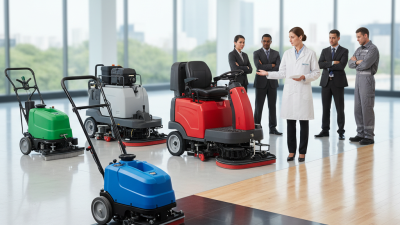
Choosing the right cleaning equipment can reshape daily operations. A Riding Floor Scrubber is built for large areas, repeated routes, and demanding schedules. It combines scrubbing, water recovery, and operator comfort in one mobile platform.
Picture a warehouse with polished concrete, narrow aisles, and tire marks near loading bays. A walk-behind machine may require several passes and frequent breaks. A riding model can cover more ground with less physical strain. It may also reduce cleaning time when used by a trained operator. The result is not simply a cleaner floor. It can mean fewer interruptions, safer walking surfaces, and more consistent maintenance.
Mike Sawchuk, a respected cleaning-industry consultant, offers a useful perspective: “The best equipment is the equipment that improves results without creating new problems.” That principle deserves attention. A Riding Floor Scrubber can support productivity, but it is not automatically the best purchase. Floor size, battery capacity, water tanks, turning radius, and service access all matter. So does operator training.
The numbers can be persuasive. Yet numbers can mislead.
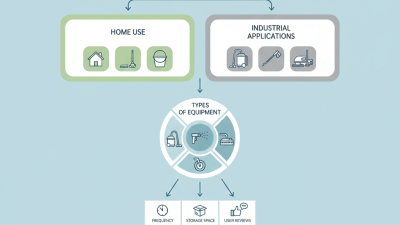
A larger machine may struggle in crowded retail spaces. A lower-cost model may need more repairs or longer charging periods. Businesses should compare coverage rates, labor demands, noise levels, and total ownership costs. They should also test the machine on real floors, not only inside a showroom. One overlooked detail can change the decision. In practical use, the best Riding Floor Scrubber is the one that fits the facility, the staff, and the cleaning routine.
Define Ride-On Scrubbers and Their Role in Commercial Floor Care
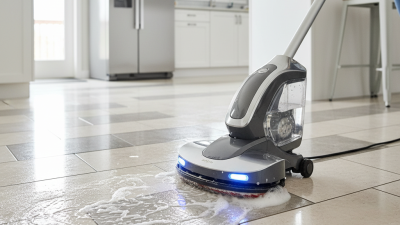
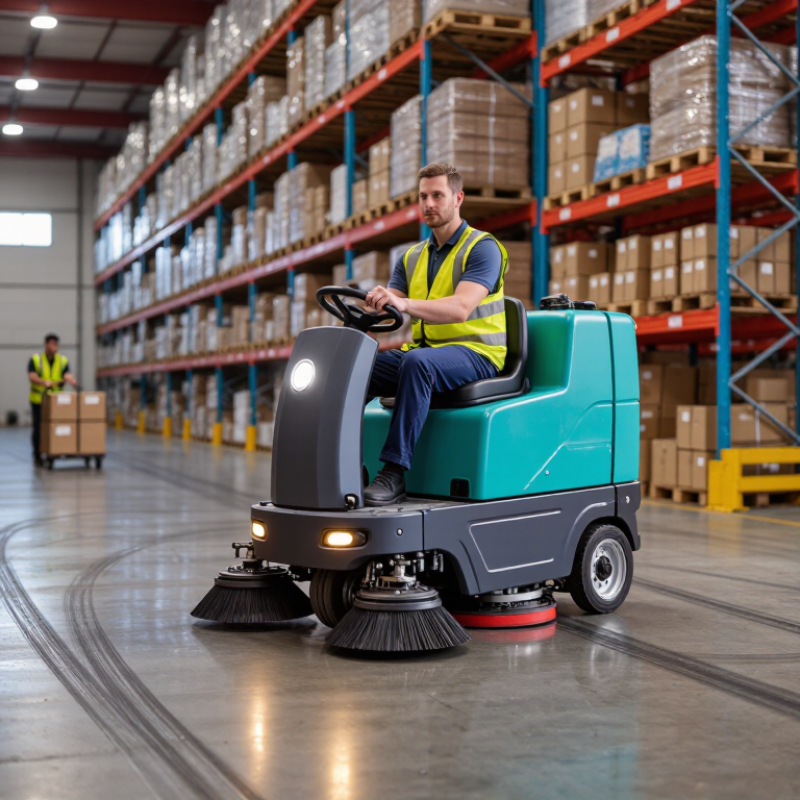
Ride-on scrubbers are powered floor-cleaning machines operated from a seated position. They combine solution delivery, rotating brushes or pads, vacuum recovery, and controlled drying in one unit. Unlike walk-behind equipment, they let operators cover large commercial floors with less physical strain. Warehouses, supermarkets, airports, and production facilities often use them for daily soil removal. The operator steers across the floor while brushes loosen dirt, and the rear squeegee collects wastewater. Floors can become usable again within minutes when the machine is correctly adjusted.
Their role extends beyond speed. Consistent cleaning helps remove tracked-in grit, food residue, and oily marks before these soils become harder to manage. Machine width, turning radius, battery capacity, and tank size should match the site. A large scrubber may be efficient in an open warehouse but awkward between narrow retail aisles. It is not magic. Poor training, excessive solution, or worn squeegee blades can leave streaks and damp patches. In my experience, the first pass sometimes exposes neglected edges that require manual detail work.
Tips: Measure aisles before choosing equipment. Check floor type and surface condition. Train operators to control speed and brush pressure. Empty recovery tanks after use. Inspect squeegees, pads, and warning indicators each day. Small checks matter. Keep a simple cleaning log, then adjust routes when traffic patterns change.
Why Choose a Riding Floor Scrubber for Your Business?
Ride-on scrubbers combine mechanical brushing, solution application, and water recovery in one pass. The chart shows theoretical cleaning productivity calculated from a constant operating speed of 4 km/h and different cleaning widths. Actual results will vary because of turns, obstacles, overlap, refilling, and floor conditions.
Compare Cleaning Capacity: Published Models Span Roughly 20,000–50,000 sq ft/h
A riding floor scrubber can cover more ground than a walk-behind unit, especially across warehouses, schools, and retail centers. Published models commonly span roughly 20,000–50,000 square feet per hour. That range is useful, but it is not a promise.
The higher figure usually reflects ideal conditions, including steady speed, full solution flow, and minimal turning. Real cleaning capacity drops when operators avoid shelving, pause for pedestrians, or make overlapping passes. A 100,000-square-foot warehouse may appear to need only two hours at 50,000 square feet per hour. In practice, aisle changes, tank refills, and battery limits can extend the job considerably.
Measure the route before choosing equipment. Note aisle width, floor texture, doorway clearance, and the distance to water and drainage points. A wider cleaning path may increase coverage, yet it can struggle in crowded areas. Operator training also matters. Smooth steering and consistent speed reduce missed strips and repeated passes. I would test a machine during normal operating hours, not only on an empty floor. Observe recovery performance near loading bays, where oil residue and tracked-in grit can slow the process. Capacity charts are helpful, but they can encourage overly optimistic planning. A realistic estimate should include productive cleaning time, maintenance checks, and short interruptions. "More square feet" is not always better.
Assess Labor and Downtime Savings Across Large, Open Floor Areas
Why Choose a Riding Floor Scrubber for Your Business?
Large, open floors make labor time highly visible. ISSA’s 612 Cleaning Times reference places powered floor-scrubbing productivity far above traditional manual methods, depending on layout and soil levels. A practical benchmark for a riding scrubber is roughly 30,000 square feet per hour. Manual mopping may deliver closer to 5,000–10,000 square feet per hour. These figures are not promises. They change with obstacles, training, water changes, and floor condition.
Consider a 100,000-square-foot warehouse. At 30,000 square feet per hour, machine operation may require about 3.3 productive hours. At 8,000 square feet per hour, manual work may require 12.5 hours. The difference can release an entire shift, especially when cleaning happens between deliveries or customer visits. The U.S. Bureau of Labor Statistics reported about 2.4 million janitors and building cleaners in 2023, showing how small efficiency gains can affect substantial labor resources.
Downtime savings can be less obvious. A riding unit reduces repeated walking, bending, and equipment repositioning across long aisles. That matters when floors must dry before forklifts, carts, or visitors return. Still, I would not calculate savings from speed alone. Recovery performance, charging time, operator skill, and maintenance interruptions can weaken the result. The spreadsheet may look impressive. The real test is measured cleaning time over several ordinary shifts.
Evaluate Water, Battery, and Solution-Tank Capacity for Each Shift
Why Choose a Riding Floor Scrubber for Your Business?
A riding floor scrubber can cover large areas with less operator fatigue than a walk-behind machine. Its value depends on capacity, not appearance. The U.S. Environmental Protection Agency’s WaterSense at Work guide reports that efficient cleaning practices can reduce facility water use by 20% or more. Therefore, measure water consumption per shift before selecting a tank size.
A 40-gallon solution tank may sound productive, yet it can create unnecessary weight on smaller sites. Match tank capacity to floor area, soil level, and refill access. A useful calculation is: usable solution volume divided by the machine’s flow rate. Battery capacity deserves equal attention. The U.S. Department of Energy’s 2023 Federal Energy Management Program guidance stresses that battery performance changes with load, temperature, and maintenance. A machine rated for eight hours may deliver less during heavy scrubbing. Real floors are rarely perfect.
Tips: Record water use for three shifts. Mark refill times. Keep a 15% battery reserve. Do not trust brochure numbers alone.
Solution tanks also need enough recovery capacity. If the recovery tank fills early, work stops even when battery power remains. The International Facility Management Association’s facility benchmarking guidance encourages managers to compare productivity using measurable time and resource data. Track square meters cleaned, refill minutes, charging time, and missed areas. One overlooked issue is wastewater handling. A larger machine may clean faster, but its recovery tank can become awkward to empty. Test the route, doorway width, ramps, and drain location before purchase. A practical trial often reveals more than a specification sheet.
Why Choose a Riding Floor Scrubber for Your Business? - Evaluate Water, Battery, and Solution-Tank Capacity for Each Shift
| Example Facility |
Floor Area per Shift |
Planning Cleaning Rate |
Estimated Scrubbing Time |
Water Allowance |
Estimated Solution Needed |
Example Solution / Recovery Tanks |
Tank Plan for One Shift |
Example Battery and Estimated Runtime |
Shift Fit |
| Retail store |
18,000 m² |
3,800 m²/hour |
About 4.7 hours |
8 L per 1,000 m² |
About 144 L |
150 L solution / 180 L recovery |
One full tank load; little spare solution capacity, so allow for a top-up if conditions increase water use. |
36 V, 240 Ah (8.6 kWh nominal); approximately 4–6 hours, depending on battery type and operating conditions. |
Generally suitable if actual runtime covers the planned scrub time. |
| Warehouse |
30,000 m² |
5,000 m²/hour |
About 6 hours |
10 L per 1,000 m² |
About 300 L |
200 L solution / 220 L recovery |
Plan on one mid-shift refill; confirm the recovery tank can be emptied or serviced as needed. |
36 V, 300 Ah (10.8 kWh nominal); approximately 5–7 hours, depending on battery type and operating conditions. |
Potentially suitable, but verify runtime under the site’s floor and operating conditions before relying on a single charge. |
| Food-processing area |
12,000 m² |
2,700 m²/hour |
About 4.4 hours |
18 L per 1,000 m² |
About 216 L |
160 L solution / 180 L recovery |
Plan on one mid-shift refill; higher water use may require more frequent tank service. |
36 V, 240 Ah (8.6 kWh nominal); approximately 4–6 hours, depending on battery type and operating conditions. |
Close to the upper end of the example runtime range; confirm operating time and cleaning requirements. |
| School or campus building |
9,000 m² |
2,500 m²/hour |
About 3.6 hours |
12 L per 1,000 m² |
About 108 L |
120 L solution / 140 L recovery |
One full tank load is adequate for the estimate, with a modest solution-volume buffer. |
24 V, 200 Ah (4.8 kWh nominal); approximately 3–5 hours, depending on battery type and operating conditions. |
Generally suitable if the verified runtime meets the planned cleaning time. |
Planning estimates only. Solution demand is calculated as floor area multiplied by the stated water allowance; scrubbing time is floor area divided by the planning cleaning rate. Actual results vary with machine settings, floor type, soil level, turns, overlap, operator pace, and battery condition. Nominal battery energy is calculated as volts × amp-hours and is not the same as usable energy. Confirm manufacturer specifications and conduct a site trial before selecting equipment.
Calculate Total Cost of Ownership, Including Maintenance and Training
A riding floor scrubber can reduce cleaning time across large areas, but its purchase price tells only part of the story. Estimate total cost of ownership over the period you expect to use the machine. Include the purchase price, financing, batteries, brushes, squeegees, detergent, and scheduled service. Add labor for daily checks and routine cleaning. Small costs add up. A battery replacement, for example, can make a low purchase price less attractive if the machine runs multiple shifts. Ask suppliers for service intervals and parts estimates, then compare them with your site’s floor area and operating hours.
Training also belongs in the calculation. Operators need time to learn safe turning, solution control, charging, and end-of-shift maintenance. Budget paid training hours for each shift, plus refresher time when staff change. A short hands-on session near the actual storage and charging area can reveal practical issues, such as a narrow doorway or an inconvenient drain. That matters. Downtime has a cost, too: estimate how cleaning will be covered if the scrubber is unavailable. Use written estimates, and check your assumptions after the first few months. Some costs are easy to miss, especially staff time. Keep a simple log of labor, repairs, consumables, and training hours to compare projected and actual expenses.