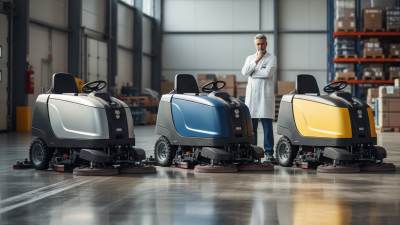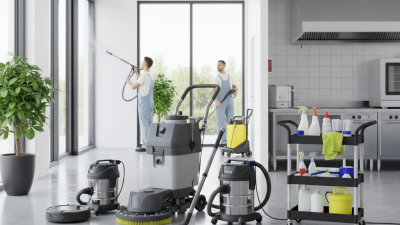
Choosing the right Floor Scrubber Machine is rarely as simple as comparing prices online. Global buyers must examine cleaning width, battery capacity, water recovery, noise levels, and service support. A compact ride-on model may suit a busy supermarket, while a durable walk-behind unit may perform better in narrow warehouse aisles. The floor surface matters, too. Polished concrete, textured tiles, and sealed stone can demand different brush pressures and pad materials.
Industry consultant David Thompson offers a practical reminder: “The best scrubber is not the biggest machine; it is the one that fits the floor, operator, and daily workload.” That point deserves attention. A machine with a 32-inch cleaning path sounds efficient, yet it may waste time in crowded spaces. A smaller model can sometimes finish faster. Strange, but true.
This guide examines ten Floor Scrubber Machine options for international buyers. Each selection is considered through practical criteria, including productivity, maneuverability, battery technology, tank capacity, operator comfort, maintenance access, and replacement-part availability. We also consider local voltage requirements, shipping conditions, training needs, and long-term operating costs. These details are easy to overlook.
Performance claims should not be accepted without context. Manufacturer test results often use ideal floors, new brushes, and experienced operators. Real facilities are messier. Dust accumulates, aisles become blocked, and batteries age. Therefore, the rankings are designed as a starting point, not an absolute verdict. Buyers should still test machines on their own floors before making a major investment. That extra step may prevent an expensive mistake.
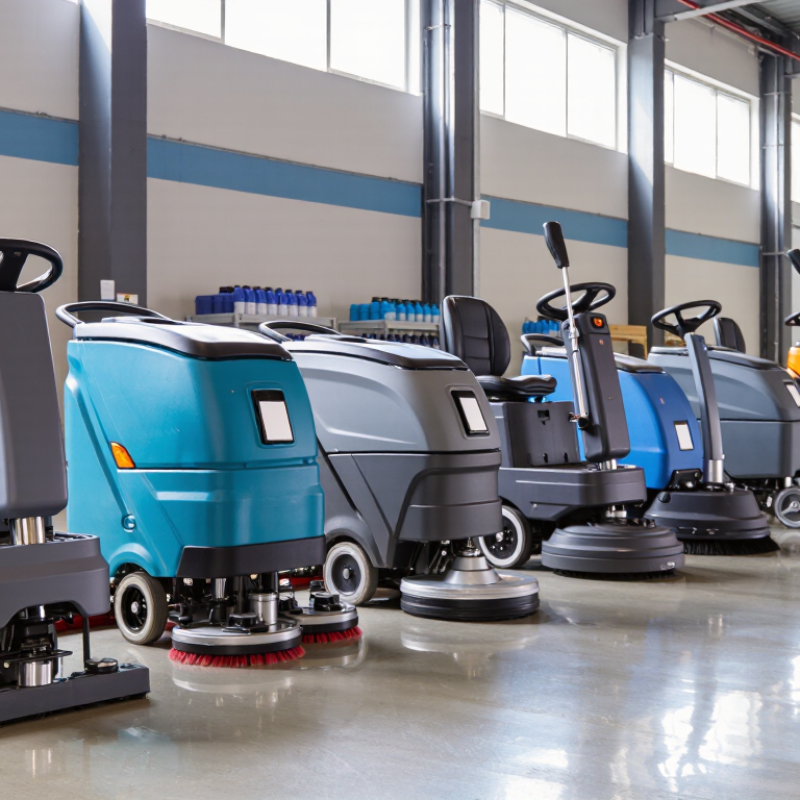
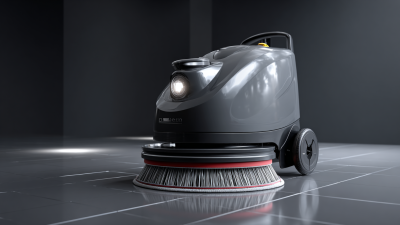
A floor scrubber machine cleans hard floors with controlled water, detergent, and mechanical agitation. It combines washing and water recovery in one moving unit. Most models include a solution tank, rotating brush or pad, squeegee, and recovery tank. The brush loosens oil, dust, and tracked-in soil. The rear squeegee then gathers the dirty liquid. A vacuum motor pulls that liquid into the recovery tank.
During operation, the machine releases a measured solution onto the floor. The brush rotates against concrete, tile, vinyl, or coated surfaces. Operators adjust pressure and speed according to the floor condition. Heavy soil may need slower passes. Delicate coatings can be damaged by excessive pressure.
That detail is easy to overlook.
In warehouses, a ride-on scrubber may cover wide aisles efficiently. In shops, schools, and clinics, a compact walk-behind model offers better control around furniture. Clean water temperature, pad selection, and chemical concentration affect the result. Too much detergent can leave a sticky film. Too little water may spread dirt instead of removing it. The recovery tank also needs frequent emptying and rinsing, especially when fine dust or food residue is present.
The machine is practical, but not foolproof. Uneven floors can leave wet strips behind. Worn squeegee blades reduce water pickup. Operators should inspect cables, brushes, tanks, and warning indicators before use. A short training session often prevents careless turns, floor damage, and unnecessary water consumption.
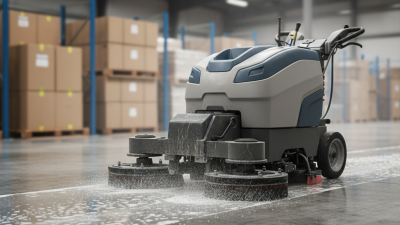
Top 10 Floor Scrubber Machines for Global Buyers
Choosing among the top 10 floor scrubber machines starts with the cleaning environment. Walk-behind scrubbers suit narrow aisles, clinics, and small retail floors. They offer close operator control around shelves and corners. Ride-on models cover warehouses, airports, and shopping centers faster. Their wider decks reduce cleaning time on large, open surfaces.
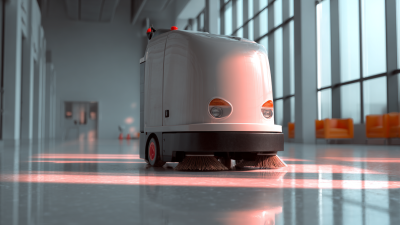
Battery-powered machines reduce cable hazards and improve movement. However, charging space and battery replacement need planning. Compact cylindrical scrubbers handle textured tiles and uneven surfaces effectively. Orbital scrubbers work well on delicate floors and use less water. Autonomous scrubbers can support routine routes, but they still need human checks. Grand View Research estimated the global floor cleaning machines market at roughly US$5 billion in 2023. Its forecast also indicates strong growth through 2030. Report definitions differ, so buyers should compare assumptions carefully.
Tips: Match the machine width to doorway sizes, lift capacity, and aisle clearance. Check recovery-tank capacity against the daily cleaning area. A machine may look powerful, yet poor drying can leave slippery patches. Test noise levels in occupied buildings. Review local service support, spare-part access, and operator training before purchase. My practical view is simple: the fastest machine is not always the best choice. A smaller scrubber may clean corners better and waste less water.
Choosing among the top ten floor scrubber machines requires more than comparing purchase prices. In real cleaning work, performance appears in measurable details: cleaning width, brush pressure, water flow, recovery strength, and drying speed. Test each machine on rough concrete, sealed tile, and tight corners. Watch the floor behind it. A damp trail can create delays and safety concerns. Battery runtime should cover a practical shift, not just a laboratory claim. Ask for independent test data, service records, and clear warranty terms. Numbers matter, but operating evidence matters more.
Tips: Calculate total cost over three years. Include brushes, squeegees, batteries, detergent, labor, charging time, and maintenance. A low-priced unit may become expensive when parts arrive slowly. Check noise levels in occupied buildings and turning radius near shelves. Operators should reach controls without bending or removing gloves. Small details often decide daily productivity. Still, no evaluation is perfect. Floor soil changes, and my own test assumptions may be too gentle. Repeat trials with measured water use and timed passes before approving a purchase.
Reliable suppliers should provide manuals, training, spare-part availability, and realistic output rates. Compare square meters cleaned per hour, not advertised maximum speed alone. Inspect welds, tanks, wheels, and battery access after repeated use. For global purchasing, confirm charging compatibility, local service coverage, and replacement-part delivery times. Ask current users about breakdown frequency and response quality. A machine that cleans brilliantly but sits idle is not efficient. Leave room for human error. Good design reduces it.
The chart compares representative anonymous machine configurations using rated cleaning productivity. Compact walk-behind units are suitable for offices, retail areas, and narrow aisles, while wider walk-behind and ride-on configurations provide higher output for warehouses, factories, airports, and large commercial facilities. Actual results depend on floor condition, operator speed, brush pressure, battery type, recovery-system efficiency, and local operating costs.
Rated productivity is shown in square metres per hour and should be evaluated together with cleaning width, tank capacity, battery runtime, service support, spare-parts availability, and total cost of ownership.
For global buyers, the top ten floor scrubber machines should be judged by cleaning output, not showroom size. A practical shortlist includes compact walk-behind units, cylindrical scrubbers, orbital models, battery ride-ons, low-noise machines, autonomous units, and heavy-duty warehouse scrubbers. Add two hybrid machines for uneven floors and water-sensitive sites. That creates ten useful formats, rather than ten similar products. The choice depends on aisle width, floor coating, shift length, and local service capacity. Small details matter. A 600-millimeter head may miss narrow aisles.
Market evidence supports this broader view. Fortune Business Insights reports that the global floor cleaning machines market reached approximately USD 5.99 billion in 2023, with continued growth projected through 2032. Grand View Research also identifies automation, battery power, and labor efficiency as key market drivers. These reports do not prove every autonomous scrubber saves money. They show where purchasing pressure is moving. Buyers should request measured coverage rates, recovery performance, recharge time, noise levels, and water consumption. Ask for test records, not optimistic brochures.
For international procurement, compare voltage options, spare-part availability, operator training, and warranty response times. A ride-on model may clean large warehouses quickly, yet a compact machine can work better around racks and doors. Lithium batteries reduce refueling interruptions, but replacement costs require serious calculation. Autonomous navigation is promising, though mapping errors still occur in cluttered spaces. My ranking would change after a wet-season trial. That is not weakness; floor conditions are rarely identical.
| Rank | Machine Configuration | Recommended Application | Cleaning Width | Typical Productivity | Solution / Recovery Tank | Power & Runtime | Key Purchasing Considerations |
|---|---|---|---|---|---|---|---|
| 1 | Compact Walk-Behind Scrubber-Dryer | Retail stores, schools, clinics, restaurants, and narrow commercial areas | 450–550 mm | 1,500–2,200 m²/h | 30–45 L / 35–50 L | 24 V battery; approximately 2.5–4 hours per charge | Strong balance of maneuverability, cleaning performance, storage efficiency, and operating cost |
| 2 | Mid-Size Walk-Behind Scrubber-Dryer | Supermarkets, warehouses, airports, and medium-sized industrial floors | 600–700 mm | 2,500–3,500 m²/h | 50–80 L / 55–85 L | 24–36 V battery; approximately 3–5 hours per charge | Suitable for daily commercial cleaning where higher coverage is needed without using a ride-on machine |
| 3 | Compact Ride-On Scrubber-Dryer | Shopping centers, logistics facilities, parking structures, and distribution centers | 650–800 mm | 3,500–5,500 m²/h | 70–120 L / 80–130 L | 24–36 V battery; approximately 3–5 hours per charge | Reduces operator fatigue and improves productivity in medium-to-large facilities |
| 4 | Large Ride-On Scrubber-Dryer | Large warehouses, manufacturing plants, convention centers, and transport terminals | 850–1,100 mm | 5,000–8,000 m²/h | 100–180 L / 110–200 L | 36–48 V battery; approximately 4–7 hours per charge | Best for broad, open floor areas where labor productivity and long operating cycles are priorities |
| 5 | Cylindrical Brush Scrubber-Dryer | Textured concrete, safety flooring, tiled surfaces, and floors with light debris | 500–800 mm | 2,000–5,500 m²/h | 40–120 L / 45–130 L | Battery or corded electric; runtime depends on battery capacity | Cylindrical brushes can provide simultaneous scrubbing and light debris collection on uneven surfaces |
| 6 | Orbital Floor Scrubber | Schools, hospitals, offices, retail floors, and areas requiring low-chemical cleaning | 400–700 mm | 1,000–3,000 m²/h | 15–60 L / 20–70 L | Battery or mains electric; commonly 1.5–4 hours for battery units | Uses orbital motion to support chemical reduction, surface preparation, and controlled cleaning on sensitive floors |
| 7 | Low-Profile Compact Scrubber | Under-shelf areas, elevators, restrooms, aisles, and congested facilities | 350–500 mm | 900–1,800 m²/h | 15–35 L / 18–40 L | 12–24 V battery; approximately 1.5–3 hours per charge | Easy to transport and store; particularly useful where turning radius and machine height are restricted |
| 8 | Heavy-Duty Industrial Walk-Behind Scrubber | Workshops, food-processing support areas, factories, and heavily soiled concrete floors | 700–900 mm | 3,000–5,000 m²/h | 70–120 L / 80–130 L | 24–36 V battery; approximately 3–5 hours per charge | Higher brush pressure and robust construction are valuable for frequent cleaning and demanding floor conditions |
| 9 | Corded Commercial Scrubber-Dryer | Small workshops, food-service areas, garages, and sites with continuous access to power | 400–600 mm | 1,200–2,500 m²/h | 20–50 L / 25–60 L | 220–240 V or 110–120 V AC; continuous operating time | Lower initial battery cost and uninterrupted operation, but cable management and local voltage compatibility are essential |
| 10 | Manual Push Floor Scrubber | Small shops, offices, corridors, residential complexes, and spot-cleaning tasks | 300–450 mm | 500–1,200 m²/h | 10–25 L / 12–30 L | Battery or mains electric; approximately 1–3 hours for battery units | Simple operation, compact storage, and lower purchase cost for small areas with limited cleaning volumes |
Choosing among the top 10 floor scrubber machines requires more than comparing brush width and battery size. Grand View Research estimates that the global floor cleaning machines market will expand steadily through 2030, driven by hygiene demands and labor efficiency. Buyers should match machine capacity to floor area, traffic, surface type, and available storage space. A compact scrubber may suit narrow aisles, while a ride-on model can reduce labor on large warehouse floors.
Operation affects results more than catalog claims. Remove loose grit before scrubbing. Use the detergent concentration stated on the safety data sheet. Excess foam can damage recovery systems and leave a slippery film. Operators should lower the brush gradually, control speed, and check the squeegee trail behind the machine. It should be clean and nearly dry. Wear suitable footwear and follow workplace training requirements. Small details matter.
Maintenance records improve reliability. Inspect blades, brushes, hoses, filters, and battery connections after each shift. Charge batteries in a ventilated area, following the manufacturer’s procedure. The U.S. Bureau of Labor Statistics continues to report substantial employment in janitorial and building-cleaning work, so clear operator training remains practical, not cosmetic. In my experience, neglected squeegee blades cause poor drying before the motor shows trouble. That assumption can be wrong. Water temperature, floor coating, and chemical choice may also be responsible. Record these variables before replacing expensive parts.